

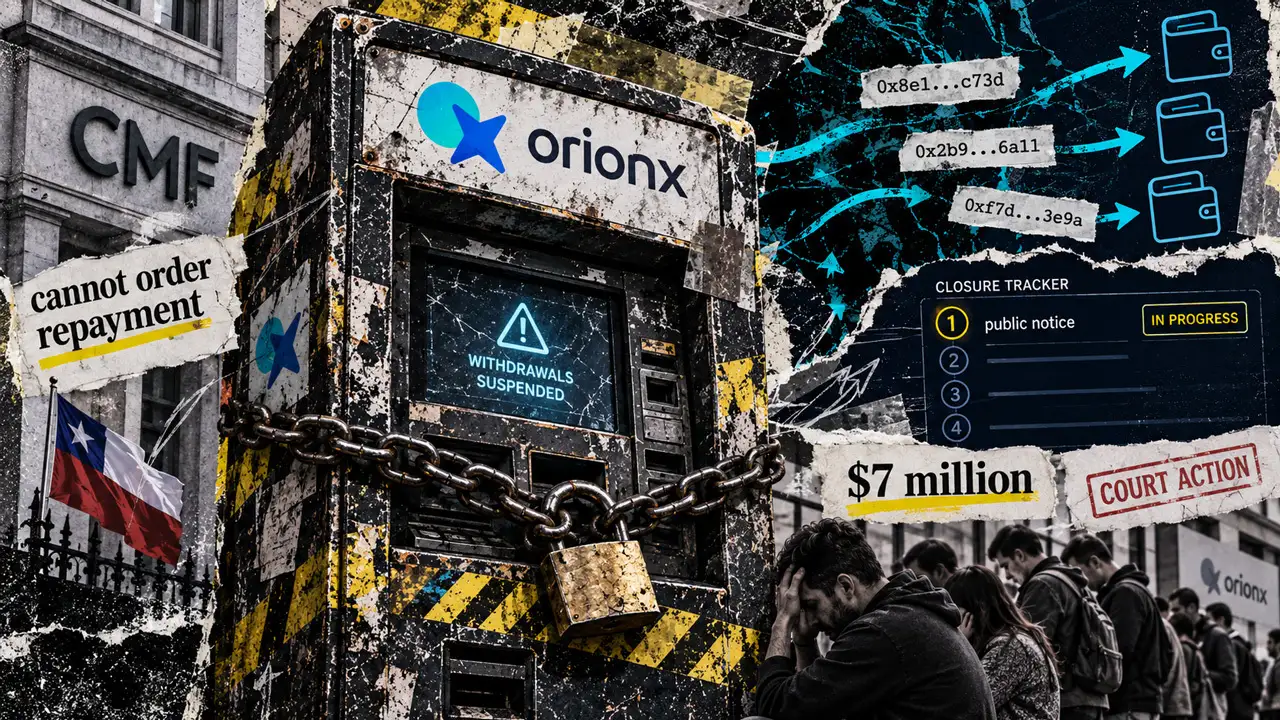
Chilean cryptocurrency exchange Orionx, backed by stablecoin issuer Tether, is shutting down permanently and has frozen customer withdrawals after more than $7 million vanished from its custody.
According to the platform, a forensic audit revealed that user assets were transferred to external wallets beyond its control. This discovery prompted the decision to shut down operations and halt withdrawals while the company determines how much capital it can salvage for users.
This collapse occurs less than a year after Tether invested in the platform in June 2025. This followed a prior 2023 investment by Bitfinex, an affiliated exchange. Tether’s financial backing was intended to fuel Orionx’s expansion throughout Latin America.
Now, clients are left in a precarious position. Chile’s financial regulator, the Comisión para el Mercado Financiero (CMF), stated it lacks the authority to supervise the exchange’s wind-down or mandate the return of user funds. Consequently, customers must rely on Orionx’s voluntary repayment process or pursue legal action in court.
Orionx explained that the withdrawal freeze was implemented to stop early-moving users from draining the remaining assets at the expense of others. Currently, the exchange’s closure tracker remains at the first of five phases. Funds will not be returned until account reconciliation is finished and a restitution plan is approved, with no timeline yet established for repayments.
Recovery efforts proceed without regulatory oversight
The CMF’s inability to intervene stems directly from the regulatory status of the exchange.
On June 19, the regulatory body turned down Orionx’s application for registration and authorization. This rejection terminated a temporary transitional grace period that had permitted the platform to operate during the review process.
Following the rejection, Orionx was barred from engaging in new regulated activities and was restricted solely to winding down its existing operations.
The regulator clarified that Orionx was never registered or authorized under Chile’s Fintech Act, noting that the firm failed to prove it held the necessary collateral required of approved financial service providers.
As a result, the CMF can only direct affected users toward the courts or Orionx itself, as it lacks the legal power to compel the exchange to return the funds.
Orionx has stated that its main objective is to return customer assets “as quickly and fairly” as possible under the circumstances. The platform has also alerted prosecutors to the unauthorized asset transfers and lodged a criminal complaint on Sept. 2 against former executives, though these accusations have not yet proven who is responsible for the missing funds.
For worried customers, the most pressing concern is the actual size of the remaining asset pool.
Before any repayments can begin, Orionx must reconcile individual account balances, calculate its total available assets, and get a distribution plan approved. The exchange’s own progress tracker indicates that all of these steps have yet to be completed.
