

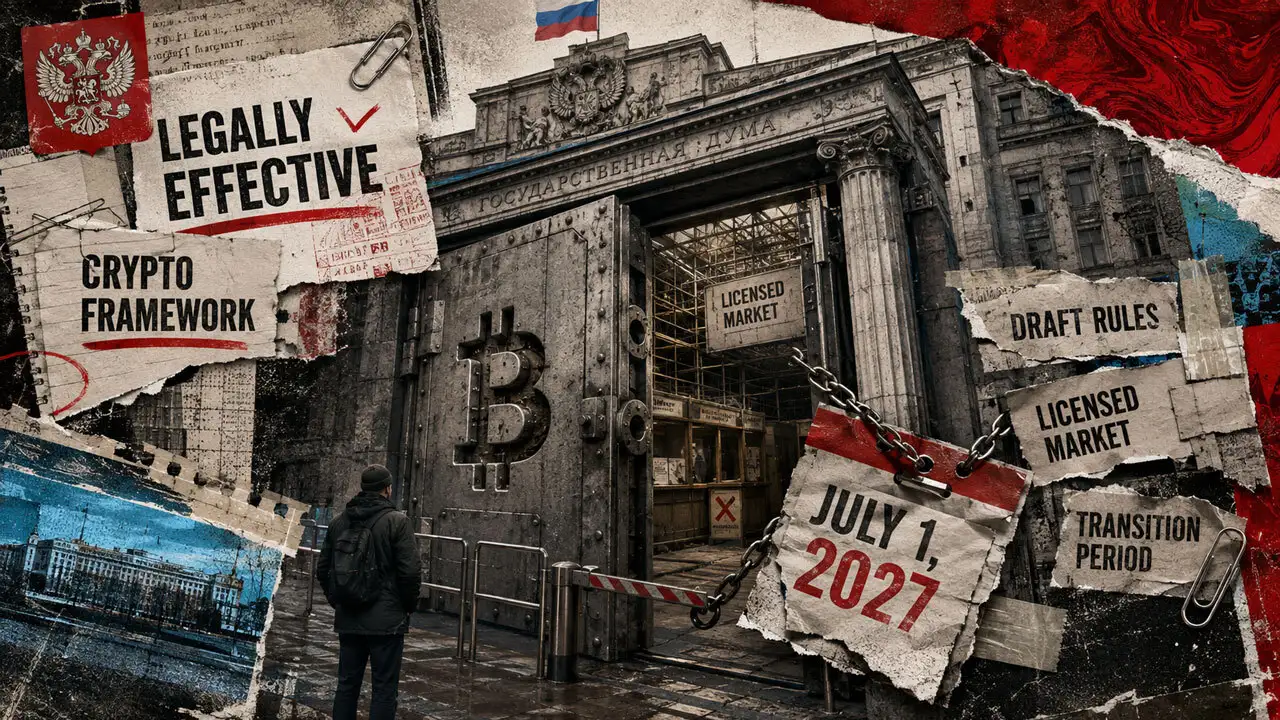
Although Russia’s new cryptocurrency legislation officially took effect on September 1, investors are currently unable to access the comprehensive market promised by the law.
Federal Law No. 282-FZ formally integrates cryptocurrency into the country’s regulated financial framework, authorizing supervised investments and international transactions through exchanges, brokers, management firms, digital depositories, and organized trading platforms. However, the majority of these pathways remain unavailable.
The Bank of Russia is still drafting the essential regulations that will dictate which digital assets retail investors can purchase, how trading platforms must calculate asset prices, and the capital mandates for digital depositories. Furthermore, businesses have been given until July 1, 2027, to secure the necessary licenses and align their operations with the new standards.
This timeline leaves Russia in a unique transitional phase: while a legal framework for cryptocurrency now exists, the practical infrastructure required for widespread adoption is still missing.
Additionally, the legislation does not permit everyday cryptocurrency transactions. Bitcoin, stablecoins, and other digital currencies remain banned for purchasing goods and services within domestic Russian markets.
Instead, their sanctioned utility is strictly limited. Importers and exporters are permitted to use digital currencies for international settlements, and investors will eventually be allowed access through authorized intermediaries. The central bank has confirmed that this regulatory scope extends to foreign stablecoins as well.
Once access is fully established, retail investors will navigate strict limitations. Non-qualified investors must pass an assessment and are limited to purchasing a maximum of ₽300,000 worth of approved cryptocurrency annually through any single intermediary. While qualified investors must also complete testing, they are exempt from this monetary limit.
The specific assets authorized for retail trading are still under review.
While the central bank has drafted an ordinance proposing Bitcoin, Ethereum, and Tether’s USDT, this selection has not been finalized. Other regulatory proposals, including those governing organized-trading pricing and the capital requirements for digital depositories, remained incomplete as the September 1 launch date approached.
Additionally, two supplementary Bank of Russia measures issued on August 27 were still awaiting registration with the Ministry of Justice, according to the regulator’s most recent status update.
This gradual implementation extends beyond corporate licensing. Multiple provisions of the law are not scheduled to take effect until July and September of 2027, illustrating that September 1 represents the initial legal framework rather than the launch of a fully operational ecosystem.
Consequently, the immediate impact of the law is simply establishing the structural blueprint for Russia’s future crypto market. The subsequent phase relies on the central bank finalizing operational guidelines and market participants securing the required licenses.
Until these steps are completed, Russia has established the legal gateway for a regulated cryptocurrency market without yet building the actual infrastructure to support it.
